Easy Sauerkraut Recipe (Only 3 Ingredients!)
This easy sauerkraut recipe with only three ingredients is one of the simplest, healthiest things I make regularly. It’s crunchy, tangy, naturally fermented, and incredibly good for your gut. Best of all? It’s low in calories, macro-friendly, and fits beautifully into a balanced, healthy lifestyle.

Easy Homemade Sauerkraut Recipe
This homemade sauerkraut has become a staple in my kitchen. No fancy equipment, no added sugars, no preservatives—just real food doing what real food does best.
It’s incredibly nutrient-dense but low in calories, which makes it perfect for anyone tracking macros or just trying to eat cleaner. Thanks to fermentation, this sauerkraut is packed with probiotics, which support gut health, digestion, and even immune function.
Here is Why I Love This Recipe
Here’s why this easy sauerkraut recipe is on repeat in my kitchen:
Simple and healthy
Low-calorie – about 30 kcal per serving (150 g)
Macro-friendly – approx. 1.3 g protein, 6.3 g carbs, 0 g fat
High in fiber and micronutrients
Naturally fermented – helps improve digestion and nutrient absorption
Naturally vegan & gluten-free
No added sugar or oils
Ingredients for Homemade Sauerkraut
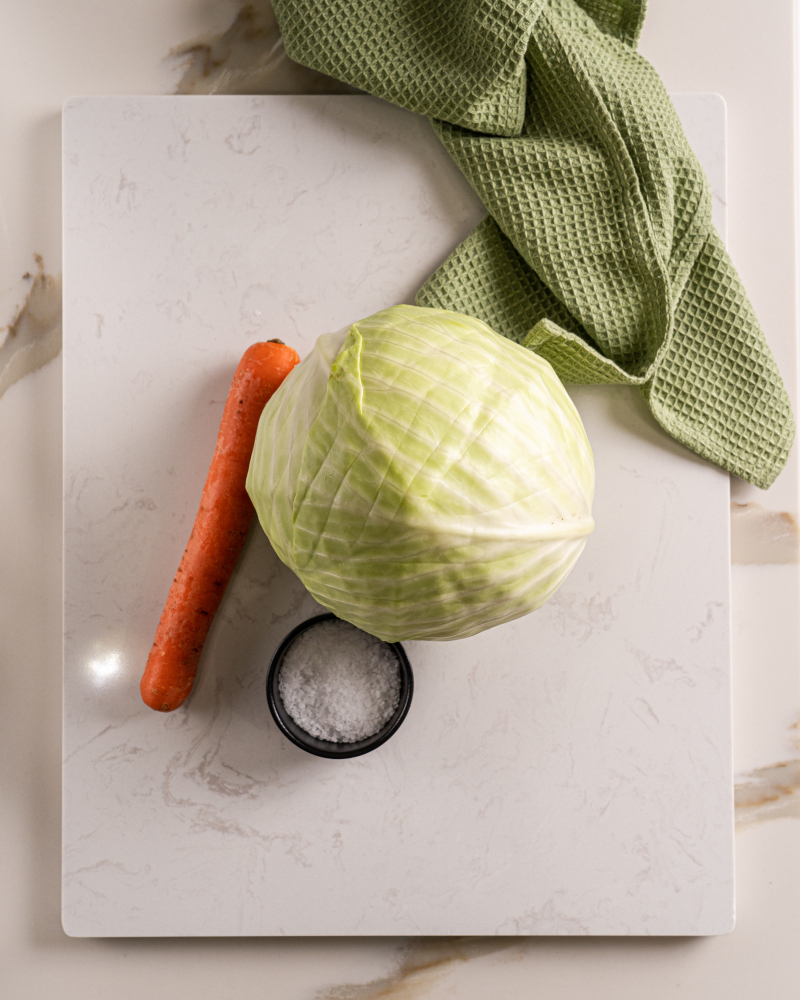
- 1 large head green cabbage (2 kg / ~4 lb without core)
- 1 large carrot (~200 g)
- 3 Tbsp pickling salt (40 g) – This equals 2% salt by weight (20 g salt per 1 kg cabbage)
*Pro tip: Using pickling or non-iodized salt is important because iodine and anti-caking agents can interfere with fermentation
How to Make Sauerkraut
Step 1: Prep the Veggies
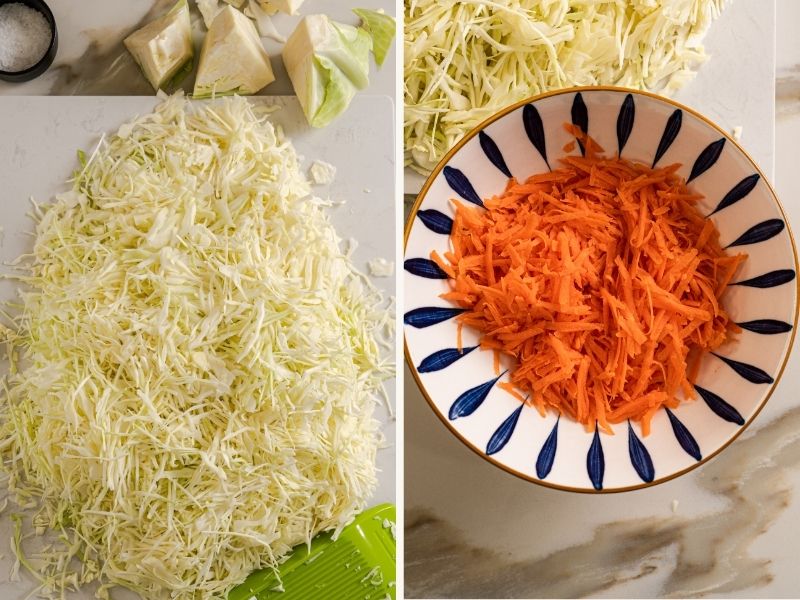
Remove any damaged outer leaves from the cabbage. Cut it into four equal quarters for easier shredding, then shred finely using a mandoline slicer or sharp knife, leaving out the core. Grate the carrot and add it to the cabbage.
Step 2: Add the Salt
Sprinkle the salt evenly over the cabbage and carrot. Using clean hands, massage the mixture for about 5 minutes until the cabbage softens and releases liquid.
Step 3: Pack It Down
Transfer the mixture into a clean glass jar or fermentation crock. Press it down firmly so the cabbage is fully submerged in its own brine.
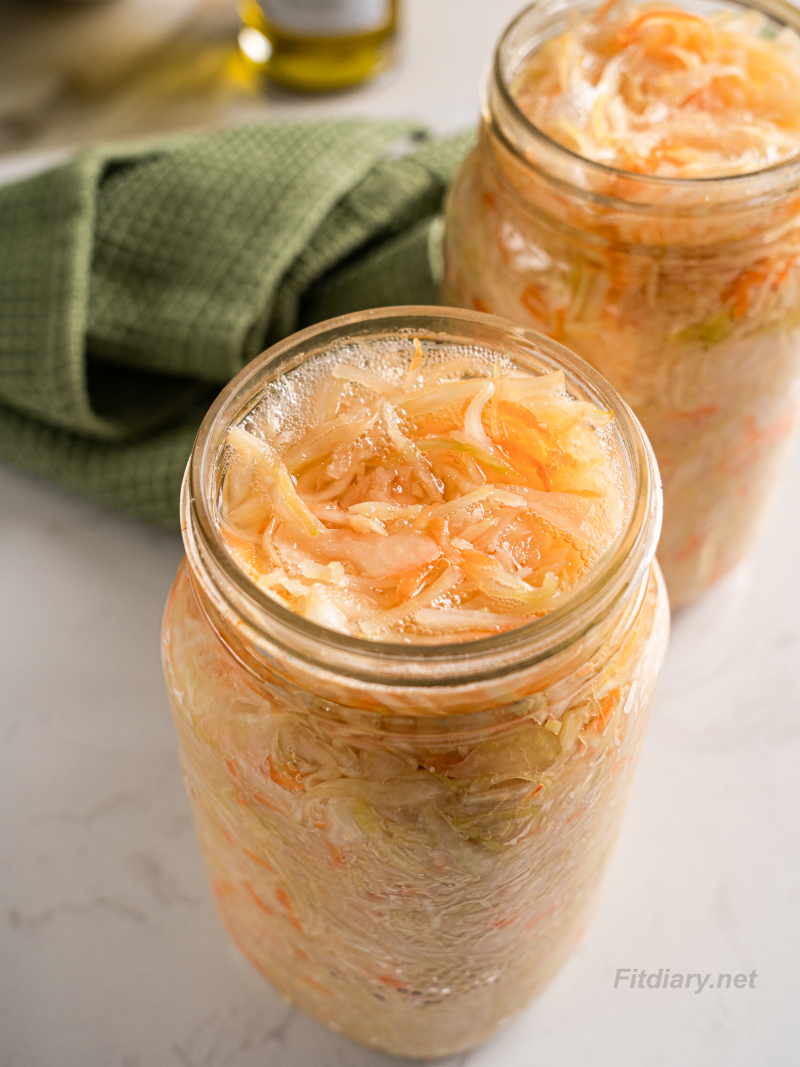
(I used two 1 L / 32 oz Mason jars.)

Step 4: Ferment
Cover loosely with a cotton towel (or use an airlock lid) and let it ferment at room temperature, away from direct sunlight, for 3–5 days.
Each day, use a wooden skewer to make a few deep holes to release any built-up gas. If the cabbage rises above the brine, gently press it back down.
Start tasting around day 3. The longer it ferments, the tangier it becomes.
Step 5: Chill
Once it reaches your preferred flavor, seal the jar and move it to the refrigerator to slow fermentation. Sauerkraut will keep in the fridge for 4–6 months after opening.
How To Serve Sauerkraut
This healthy fermented sauerkraut is incredibly versatile. I add it to meals all week long for a nutritional boost without blowing my macros.
Try it:
- As a simple side dish with a drizzle of olive oil and chopped green or red onion
- Paired with chicken (try Baked Pesto Chicken or Air Fryer Chicken Drumsticks) or pork
- On top of salads for crunch and tang
- Served alongside Air Fryer Vegetables and Potatoes or Mashed Potatoes and Cauliflower
- In grain bowls or macro-friendly meal prep bowls
- Alongside eggs for a gut-friendly breakfast
- As a topping for wraps, burgers, or sandwiches—delicious with Roasted Turkey Breast or Roast Beef

How To Store Sauerkraut
Once refrigerated, homemade sauerkraut can last several months if kept submerged in brine.
Storage tips:
- Always use a clean utensil when scooping
- Store in an airtight glass jar or container
- If it smells pleasantly sour and fresh, it’s safe to eat
FAQs
Is homemade sauerkraut healthy?
Yes! Homemade sauerkraut is rich in probiotics, fiber, vitamin C, and antioxidants. It’s a natural, fermented food with no additives.
How long should sauerkraut ferment?
Most people enjoy it between 5–10 days, but you can ferment it longer for a stronger flavor.
Can I reduce the salt?
It’s best not to. The 2% salt ratio is key for safe fermentation and proper texture.
Is this sauerkraut low-calorie?
Absolutely! A typical serving is very low in calories, making it ideal for weight management and macro tracking.

How Many Calories in Homemade Sauerkraut?
| Calories (1 serving, 150g): 30 kcal | Calories (per 100g): 20 kcal |
|---|---|
| Protein: 1.3 g | Protein: 0.9 g |
| Carbohydrates: 6.3 g | Carbohydrates: 4.2 g |
| Fat: 0 g | Fat: 0 g |

Easy Sauerkraut Recipe (Only 3 Ingredients!)
Ingredients
- 1 lg (2 kg / ~4 lb) without core green cabbage
- 1 lg (~200g) carrot
- 3 Tbsp (40g) pickling salt *(see notes)
Instructions
- Prepare the vegetables: Remove any damaged outer leaves from the cabbage. Cut it into quarters and shred finely using a mandoline slicer or sharp knife. Grate the carrot and add it to the cabbage.
- Add salt and massage: Sprinkle salt over the vegetables and massage for about 5 minutes until the cabbage softens and releases liquid.
- Pack It Down: Transfer the mixture into a clean glass jar or fermentation crock. Press it down firmly so the cabbage is fully submerged in its own brine.
- Ferment: Cover loosely with a lid or cotton cloth and ferment at room temperature, away from direct sunlight, for 3–5 days. Each day, use a wooden skewer to make a few deep holes to release trapped gas and press the cabbage down under the brine if needed.
- Refrigerate: Taste after day 3. Once tangy enough, seal and refrigerate for up to 4–6 months.
Notes
**Use pickling or non-iodized salt for best fermentation results, as iodine and anti-caking agents can interfere with the process. How Many Calories in Homemade Sauerkraut?
| Calories (1 serving, 150g): 30 kcal | Calories (per 100g): 20 kcal |
|---|---|
| Protein: 1.3 g | Protein: 0.9 g |
| Carbohydrates: 6.3 g | Carbohydrates: 4.2 g |
| Fat: 0 g | Fat: 0 g |
Leave a Reply
You must be logged in to post a comment.